Success on TikTok Shop attracts imitators. When a product goes viral, it can take only days for copycat listings to appear, some using your images, your product name or even your creators' videos. Counterfeits can damage your reputation when buyers receive poor-quality fakes. Impersonator accounts can mislead your audience. And, on the other side, careless use of other brands' intellectual property can lead to complaints against your own shop.
This guide explains how to protect your brand on TikTok Shop and how to stay on the right side of intellectual property rules yourself. It is general information, not legal advice; consult an intellectual property professional for your specific situation.

Common Threats to Your Brand
- Counterfeits: fake products sold under your brand name.
- Image theft: other sellers using your product photos or videos for their listings.
- Copycat products: lookalike products that may infringe design rights or patents.
- Listing hijacking: sellers using your brand name in titles to capture your traffic.
- Impersonator accounts: profiles posing as your brand, often for scams.
- Unauthorised resellers: sellers offering your genuine products without permission, sometimes with poor service.
Step 1: Register Your Trademark
A registered trademark is the foundation of brand protection on most platforms. It gives you a clear legal basis for reporting infringement. Register your brand name and logo in the markets where you sell, in the relevant product classes. The process takes time, so start early. A pending application may help in some situations, but a registered mark is stronger.
Step 2: Register Your Brand on TikTok Shop
TikTok Shop offers brand registration features in Seller Center that link your trademark to your shop. Registration can help protect your listings, may unlock category or brand features and supports infringement reporting. Keep documents current. Our seller requirements guide covers brand registration documents.
Step 3: Monitor the Marketplace
You cannot report what you do not see. Build a monitoring routine:
- Search your brand name, product names and key terms in the Shop tab weekly.
- Search for products that look like yours, using image-led browsing and category pages.
- Watch for your images in competitor listings.
- Check creator content using your brand name for unfamiliar shop links.
- Search TikTok for accounts using your brand name or logo.
During viral moments, monitor daily, since copycats move fastest then.
Step 4: Report Infringement
TikTok provides intellectual property reporting channels for trademark, copyright and other rights infringement. When reporting:
- Identify the exact listings, videos or accounts involved.
- Specify the right being infringed, such as your trademark or copyright in photos.
- Provide evidence: registration certificates, original image files with dates and comparisons.
- Keep records of every report and outcome.
Be accurate. Reporting in good faith matters, and filing false or exaggerated claims can create problems for you.
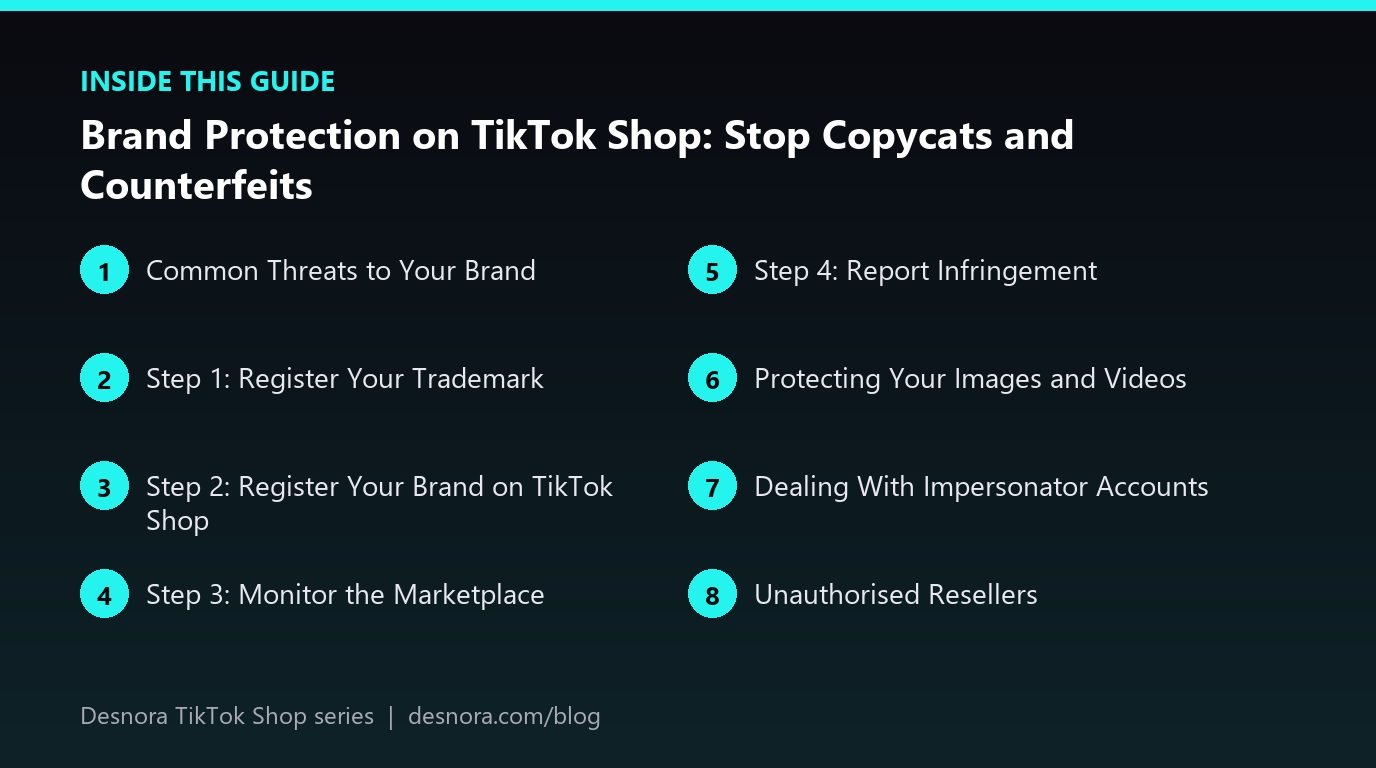
Protecting Your Images and Videos
Your product photography and videos are protected by copyright when you own them. Keep original files with metadata, record who created them and ensure contracts with photographers and creators clarify ownership or licensing. Subtle branding within images, such as your logo on packaging, makes theft easier to prove and less appealing. Our product images guide covers creating distinctive visuals.
Dealing With Impersonator Accounts
Impersonators may copy your name, logo and content to scam followers, for example with fake giveaways. Report impersonating accounts through TikTok's reporting tools, warn your followers in a short video or pinned comment and moderate scam comments on your posts. Pursuing verification options available to your account type can help audiences identify the real brand. Our comment management guide explains moderation.
Unauthorised Resellers
Resellers of genuine products are a more complex issue, since selling genuine goods is not always infringement. Options include tightening distribution agreements, limiting wholesale accounts, using serial numbers or batch codes to trace sources and addressing genuine policy breaches through platform channels. Seek legal advice before taking action against resellers.
Competing With Copycats
Enforcement does not stop every copycat, so build advantages they cannot easily copy:
- A recognisable brand with consistent packaging and voice.
- Strong reviews and social proof.
- Loyal creator relationships.
- Superior quality demonstrated on camera.
- Bundles, accessories and service that add value.
- Continuous innovation with new variants and products.
Our guide to competitor analysis explains how to stay ahead.
Avoiding IP Complaints Against Your Shop
Protection works both ways. Common ways brands accidentally infringe include:
- Using other brands' names in titles to borrow their traffic, beyond accurate compatibility statements.
- Calling products "dupes" of named brands.
- Using copyrighted music, images or characters in content without rights.
- Selling designs that copy protected products.
- Implying endorsements by celebrities or brands.
IP complaints can remove listings and count against your account health. Our account health guide explains the consequences.
Responding to a Complaint Against You
If you receive an IP complaint, review it carefully. If it is valid, remove or correct the content quickly. If you believe it is mistaken, for example because you own the rights or have a licence, respond through the official process with documentation. Keep records and seek legal advice for significant disputes.
Creator Content and IP
Creators sometimes use copyrighted audio or reference other brands in ways that create risk. Include guidance in briefs: use commercially licensed audio, avoid other brands' logos and do not call your product a dupe of a named brand. Our guide to creator contracts explains how to include these terms.
Protecting Product Designs
Trademarks protect names and logos, but not necessarily the look or function of a product. Depending on your market, design registrations, patents or other protections may cover distinctive product shapes, patterns or inventions. These protections take time and money to secure, so focus on products that are genuinely novel and commercially important. Discuss options with an intellectual property professional before launching a product you expect to be widely copied, since some protections must be applied for before the design is publicly disclosed.
Working With Creators to Spot Fakes
Your creators and customers are often the first to notice counterfeits. Creators may receive messages from followers who bought a fake, and customers may leave reviews describing products that do not match your quality. Encourage creators to tell you when they see suspicious listings using your name or their content, and make it easy for customers to verify genuine products, for example through your official shop link or packaging features. A wide network of eyes makes monitoring far more effective than your team searching alone.
Documenting Everything
Strong records make enforcement faster and more successful. Keep a library of trademark certificates, original image and video files, creator agreements showing content ownership, product launch dates and examples of genuine packaging. When you find infringement, capture screenshots with dates, listing links and seller names before reporting. If a dispute escalates, organised evidence saves time and strengthens your position.
Brand Protection Routine
- Weekly searches for your brand, products and images.
- Daily monitoring during viral spikes.
- Prompt, well-documented infringement reports.
- Impersonation checks and follower warnings when needed.
- Annual review of trademarks in new markets.
- IP guidance in every creator brief.
Desnora helps brands set up brand registration, monitor listings and handle infringement on TikTok Shop and Amazon. Explore our TikTok Shop services or contact our team.
Frequently Asked Questions
Do I need a trademark to protect my brand on TikTok Shop?
A registered trademark is the strongest foundation for reporting infringement and registering your brand in Seller Center.
How do I report a counterfeit on TikTok Shop?
Use TikTok's intellectual property reporting channels, identify the listings, specify the right infringed and provide evidence such as registration certificates.
Someone is using my product photos. What can I do?
If you own the images, you can report copyright infringement with original files and evidence of ownership.
How do I deal with fake accounts pretending to be my brand?
Report the accounts, warn followers with a video or pinned comment and moderate scam comments on your posts.
Can I stop people reselling my genuine products?
It depends on the situation and local law. Tighten distribution agreements and seek legal advice before acting against resellers of genuine goods.
Can I call my product a dupe of a famous brand?
Doing so risks intellectual property complaints. Describe your product on its own merits instead.
What happens if someone files an IP complaint against me?
Listings may be removed and account health affected. Fix valid issues quickly, or respond with documentation through the official process if mistaken.
How often should I check for copycats?
Search weekly for your brand, products and images, and daily during viral spikes, when copycats appear fastest.
How can I compete with cheaper copycat products?
Build advantages copycats cannot easily match: a recognisable brand, strong reviews, loyal creators, quality shown on camera, better bundles and continuous innovation.
Can I protect my product design, not just my brand name?
Depending on the market, design registrations or patents may protect distinctive shapes or inventions. Some must be applied for before public disclosure, so seek professional advice early.
What evidence should I keep for infringement reports?
Keep trademark certificates, original image and video files, creator agreements, launch dates and dated screenshots of infringing listings with links and seller names.